
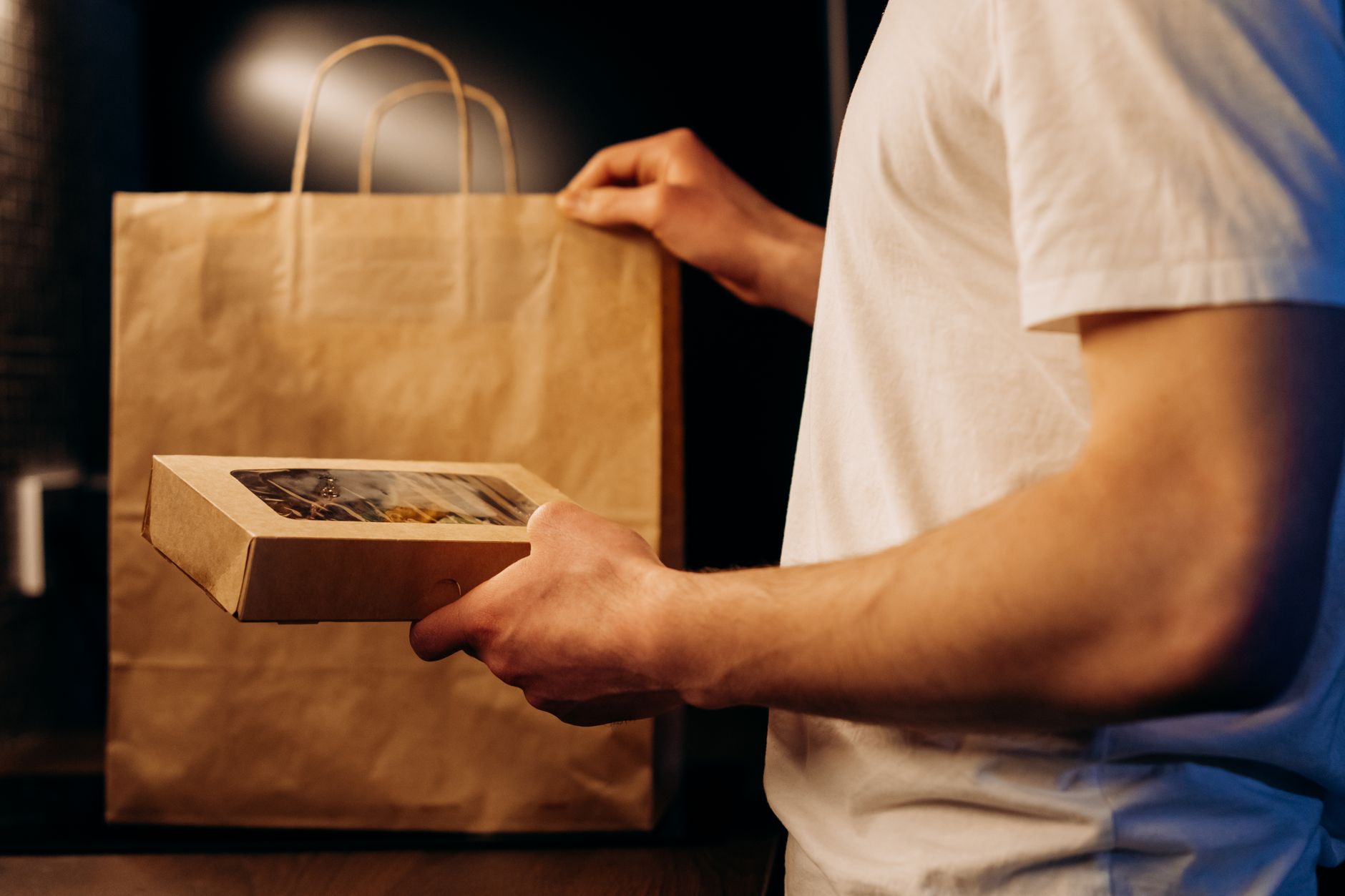
In delivery, your customer does not judge taste alone. They judge whether the food arrived hot, whether the chips turned rubbery, whether the sauce spilled, and whether the salad wilted next to a piping-hot dish. The right packaging keeps the temperature, protects the texture and makes the order look cared for from the very first glance. You do not need to change everything overnight. You need to look at each dish separately, test materials and create a simple process for the kitchen and delivery.
Start with the food itself, not the box
The most common mistake is buying one type of packaging and trying to fit your whole menu into it. A burger has different needs from a pasta dish, a roast with chips, or a cold dessert. Before you choose a material, split your dishes into categories.
- Crispy: chips, chicken bites, fried items. They need ventilation so they do not soften.
- Juicy: stews, sauces, meats with liquid. They need secure closing and heat resistance.
- Dishes with many parts: meat, side dish, salad, dip. They need separation.
- Cold: salads, desserts, drinks. They should not go in the same bag as hot dishes.
Create a small table with your 15-20 core products and write next to each one: temperature, moisture, sensitivity during transport and ideal position in the bag. This makes packaging choice a practical decision, not a random purchase.
Choose materials that keep heat without ruining texture
Packaging should keep food warm, but not “suffocate” it. If very hot food is closed immediately in an unsuitable box, steam returns to it and changes the texture. That is where you need a balance between insulation and ventilation.
- Insulated boxes: help with dishes that need to stay hot, such as roasts, stews and pasta.
- Aluminium foil or aluminium containers: useful for high-temperature foods, as long as they close properly and do not deform.
- Paper packaging with ventilation: better suited to crispy products, because it reduces moisture build-up.
- Well-fitting lids: essential for sauces, soups and dishes with juices.
Run tests in real conditions: prepare the dish, close it, leave it for 20-30 minutes and open it as the customer would. If the texture has deteriorated, change the material or the way it is closed.
Separate hot, cold, liquid and crispy items
Even the best packaging fails if everything goes into the same bag without thought. A hot burger next to a cold salad, chips under a heavy container, or a dessert on top of hot food create a poor experience. The solution is to set packaging rules that everyone follows.
- Put cold products in a separate bag when the order also includes hot items.
- Place heavy containers at the bottom and lighter items on top.
- Put sauces and dips in separate containers, not poured over the food, when there is a risk of it softening.
- Do not seal crispy items completely airtight, unless the product requires it.
- Use dividers or separate boxes for dishes with salad and a hot side.
A simple example: in a portion with gyros, chips, pitta and salad, you can keep the salad separate and put the sauce in a small container. The dish arrives closer to what you would serve in your restaurant.
Seal properly for transport without leaks
Temperature does not matter if the order arrives spilled. Leaks are among the most annoying problems for the customer and among the most expensive for the restaurant, because they often lead to complaints, resends or refunds. That is why you need a check before the order leaves.
- Check the lid: press gently all the way around to make sure it has clicked into place.
- Do not overfill: leave a little space in soups, sauces and stews so the lid is not under pressure.
- Use a second layer of protection: for very liquid dishes, put the container in a separate small bag before it goes into the main one.
- Place upright: products with liquid should not be placed sideways or squeezed in.
- Seal the bag: a security sticker shows care and reduces the risk of it opening during transport.
Train your team to do a “movement test”: a gentle lift and move of the bag before it is given to the delivery rider. If something slides or tilts, it can be corrected before it becomes a problem.
Set up a packaging station with a clear flow
Good packaging is not only about materials. It is also about speed, order and organisation. If the boxes are far away, the lids are mixed up and the stickers have disappeared, your team will make mistakes under the pressure of service. Create a packaging station that works like a small production line.
- Put the most frequently used boxes within easy reach.
- Keep lids and containers together, not in different places.
- Have a fixed place for bags, stickers, a marker and napkins.
- Hang up a small list of rules: “cold items separate”, “sauces upright”, “heavy items at the bottom”.
- Decide who does the final check before the order leaves.
If you have several people in the kitchen, add a simple “delivery check” role at peak times. This person does not necessarily cook; they check whether the order is complete, properly closed and sensibly arranged.
Connect packaging with delivery time
Packaging has its limits. No box can save food that has sat on the counter for too long or travelled a long way without the right order of steps. That is why delivery quality also depends on timing: when the food is prepared, when it is closed, when it is collected and how quickly it arrives.
Set practical rules: crispy items should be closed last, cold items should come out of the fridge shortly before the order leaves, and hot items should go into a thermal bag immediately. If you have your own delivery riders, help them collect in the right order and avoid unnecessary delays. For better team organisation, you can also see the guide App for your delivery riders, especially if you want a clearer flow from order acceptance to delivery.
Keep notes on complaints related to temperature or delay. If you see a pattern in a specific area, time or dish, that is where your process needs to change.
Use the look of the packaging for a better experience
Packaging is the first “shop window” the customer sees at home. It does not need to be expensive to look professional. It needs to be clean, stable, easy to open and remind the customer of your business. Appearance helps, but it should not make the packaging harder to use.
- Add a simple sticker with your name or logo.
- Use labels to distinguish dishes, especially when there are similar options.
- Write short instructions where needed, such as “open the lid for 1 minute before eating” on very hot or crispy products.
- Add a QR code or ordering link to the bag, if you accept online orders through your own channel.
- Avoid too many papers, leaflets or materials that confuse the customer.
If you use an online ordering system such as Wiiz Eat, you can use your own link or QR code on bags, your shopfront and printed materials, so the customer knows where to find you again easily.
Think sustainability without sacrificing quality
Many customers appreciate more responsible packaging choices, but sustainability must be combined with proper function. If an “eco” package opens, gets soggy or cannot withstand the temperature, it ultimately damages the experience and creates food waste. Test before you decide.
- Ask suppliers for samples and test them with your own dishes.
- Check whether they can handle hot, fatty or liquid foods.
- Reduce unnecessary materials: do not add lots of cutlery, napkins or small bags without a reason.
- Give the customer the option to request or not request cutlery, if that fits your process.
- Choose packaging that is easy to store and does not take up excessive space.
The best solution is the one that keeps the food right, reduces complaints and does not load the order with useless materials. Start with your best-selling products and improve gradually.
Run regular tests and improvements
Packaging is not a decision you make once and then forget. The menu changes, distances change, peak times change and customer needs change. Put in place a simple review process every month or whenever you add a new dish to delivery.
- Test the order like a customer: closing, transport, opening, temperature, appearance.
- Ask the team which boxes make service difficult for them.
- Record complaints about cold food, leaks or altered texture.
- Compare two different packages for the same dish with a hypothetical 20-30 minute route.
- Keep only what works consistently and makes daily work simpler.
The right packaging is not a luxury. It is part of your product. When the food arrives hot, clean and as you designed it, the customer feels respected. And that feeling is what makes an order happen again.